Mudroom Storage Ideas: Designing an Entry Space That Actually Works
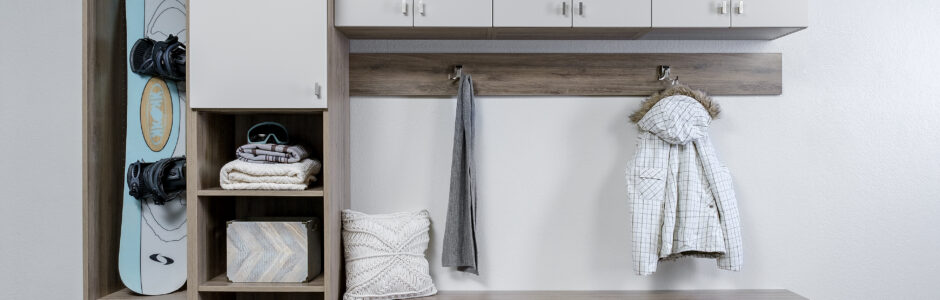
In many homes, the mudroom quietly becomes one of the hardest-working spaces in the house. Shoes, coats, backpacks, sports gear, and daily clutter all pass through this area multiple times a day. Because of that constant traffic, the mudroom can either become a chaotic drop zone or one of the most helpful organizational spaces in the home.
The first thing people often don’t realize is that a mudroom doesn’t have to be a separate room. In some homes it’s located inside the garage entry. (For larger household storage zones, our guide to smart garage storage solutions explores how to organize the items most garages hold.) In others it’s just inside the front or side door. Wherever that landing zone is for coats, shoes, and bags, that’s the perfect place to introduce mudroom storage.
When storage is thoughtfully designed, the mudroom becomes the place where daily routines begin and end smoothly. Instead of piles forming on the floor or kitchen counters, coats, shoes, and backpacks have clear homes that make everyday life easier.
Individual Lockers for Family Members
One of the most effective mudroom design features is creating individual locker-style spaces for each person in the household.
These lockers typically include a hook for coats, a cubby or shelf for hats and bags, and a bench area below for shoes. When each family member has a dedicated space, the mudroom naturally stays more organized because everyone knows where their items belong.
Some families prefer an open locker design where coats and bags are visible on hooks. Others prefer a more enclosed look with doors covering the lockers. Both options can work beautifully depending on your home and your personal style.
Finding the Right Balance Between Open and Enclosed Storage
One of the most important decisions in mudroom design is how much of the space should remain open and how much should be hidden behind doors.
Open lockers and hooks make it easy to grab coats, backpacks, and sports bags quickly. They also encourage family members to actually use the system because everything is simple and accessible.
On the other hand, cabinets or locker doors create a cleaner visual look by hiding everyday clutter.
Most homeowners find the best solution somewhere in the middle. A combination of open seating space with hooks above, along with cabinets or drawers nearby, allows the mudroom to stay functional while still looking polished.
A Bench That’s Actually Usable
Bench seating is one of the most practical features in any mudroom. It provides a comfortable place to sit while putting on or removing shoes and creates a natural gathering point within the space.
Sometimes people are tempted to divide the bench area into too many small sections or cover everything with doors. While that may create more compartments, it can also eliminate the ability to actually sit and use the space.
Leaving a generous section of bench open often makes the mudroom far more functional for daily life.
Durable Hooks for Everyday Items
Hooks tend to be the hardest-working feature in a mudroom. Coats, backpacks, purses, and sports bags often land here first when someone walks through the door.
Installing sturdy hooks mounted securely into the wall or panel system allows these items to hang neatly while staying easy to grab on the way out. Hooks placed at multiple heights can also make the system easier for children to use independently.
Pull-Out Shoe Storage That Keeps Floors Clear
Shoes are often the biggest source of mudroom clutter. Without a designated place for them, they quickly spread across the floor and make the space feel crowded.
One of the most effective solutions is a pull-out shoe drawer. With full-extension slides and soft-close hardware, these drawers allow you to pull the drawer open, kick the shoes inside, and gently close it again.
This keeps footwear contained, makes cleanup easy, and prevents the mudroom from turning into a pile of shoes near the door.
Cabinets for Items You Don’t Use Every Day
While hooks and open spaces work well for everyday items, cabinets provide a place to store the things you don’t need to see all the time.
Seasonal accessories, pet supplies, extra bags, or household overflow items can all live inside cabinets while keeping the mudroom looking calm and organized.
This combination of open storage and concealed cabinets helps the space stay both functional and visually tidy.
Why Mudroom Storage Matters
Mudrooms may not always be the largest space in a home, but they play a powerful role in everyday organization.
When coats, shoes, and bags have designated storage, clutter stays contained near the entry point instead of spreading throughout the house. A thoughtfully designed mudroom supports daily routines and helps families stay organized without constantly feeling like they are cleaning up after themselves.
Just as thoughtful storage improves closets and garages, a well-planned mudroom system creates a smoother transition between the outside world and the comfort of home.
If you’re interested in other ways to improve storage throughout your home, you may also enjoy our article on closet design features that elevate everyday organization.
Frequently Asked Questions About Mudroom Design
What is the purpose of a mudroom?
A mudroom acts as a transition space between the outdoors and the rest of the home. It provides storage for coats, shoes, bags, and outdoor gear so that dirt and clutter stay contained near the entry point.
Does a mudroom have to be a separate room?
Not at all. Many mudrooms are simply located at the garage entry or just inside a frequently used exterior door. Wherever coats and shoes naturally collect is often the best place to create mudroom storage.
Are mudroom lockers worth it?
Mudroom lockers are one of the most effective storage solutions for families. Giving each household member a designated space keeps coats, backpacks, and everyday items organized.
What is the best way to store shoes in a mudroom?
Pull-out shoe drawers are one of the most efficient options. They allow shoes to stay contained while remaining easy to access and keep the floor from becoming cluttered.
How do I get started designing a mudroom?
Start by identifying the items your household uses every day when entering or leaving the home. From there, storage can be designed to accommodate coats, shoes, bags, and gear in a way that fits both your routines and the available space.