Small Closet Organization Ideas That Maximize Every Inch
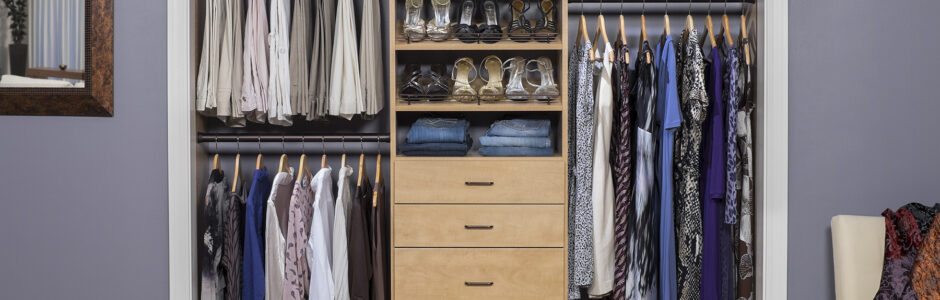
Small closets can be surprisingly tricky to design well, but can have the largest impact! At first glance, it might seem like the only goal is squeezing as much storage as possible into a tight space. In reality, the real challenge is creating a system that is both efficient and easy to use every day.
When a closet is poorly designed, even a small amount of clutter can make it feel chaotic. The key is balancing vertical storage, accessibility, and the way the space will actually be used. Here are some of the biggest considerations when designing a small closet so it works better and stays organized long term.
Pay Attention to Ceiling Height
One of the first things I look at when designing a small closet is the height of the ceiling.
Higher ceilings can make it tempting to extend closet systems all the way up, but in a typical reach-in closet, the door opening often limits how usable that space really is. Most closet doors have a header around 84 inches high, and that creates a practical limit for the top shelf.
If shelving goes higher than that point, accessing the top shelf becomes surprisingly awkward. Items have to be small or flexible enough to fit between the door opening and the shelf before they can be lifted up and over onto the storage area.
That can turn the top shelf into a bit of a puzzle every time you try to use it.
Sometimes the better solution is to keep shelving at a height that allows items to be easily lifted in at an angle, especially if larger bins or storage containers will be stored there. Maximizing vertical space is important, but not if it makes the closet difficult to use.
Consider the Closet Door Type
Another factor that dramatically affects small closet organization is the type of door on the closet. Closet doors determine how much of the interior space can actually be accessed at one time.
Some common configurations include:
- French doors that open fully
- Sliding doors that only expose half the closet at a time
- Bifold doors that fold outward but still limit access in certain areas
If the closet has wide-opening doors, there may be room to include drawers in the center of the system. Drawers are wonderful because they fully extend, close softly, and make one-handed put-away easy.
However, in closets with limited openings, placing drawers in the center can actually reduce usable storage. If drawers create narrow pockets on the sides that are difficult to reach, it may be better to prioritize shelves or hanging space instead.
Good small closet design always starts by understanding how the door affects the usable space.
Shelves, Hanging Space, and Drawers Must Work Together
Most small closets need a thoughtful combination of storage types. Depending on how the closet is used, that might include:
- short hanging sections for shirts or folded pants
- long hanging sections for dresses or coats
- shelves for folded items or storage bins
- drawers for smaller clothing or accessories
Children’s closets often benefit from a mix of short hanging, shelves, and drawers that allow items to grow and change over time. Coat closets follow a similar pattern, combining hanging space with shelves or bins for seasonal accessories.
The goal is not simply fitting as much as possible into the closet. The goal is creating a system that makes it easy to put things away.
When Bins Can Replace Drawers
Drawers are a beautiful feature in custom closets. They offer full extension, soft-close hardware, and easy access.
However, they are not always the best solution for every small closet.
In some spaces, bins can work just as well while keeping the system simpler and more flexible. A bin placed on a shelf can hold similar items while still being easy to pull out and put away.
This approach works especially well in kids’ closets or areas where the contents change frequently.
Drawers create a polished built-in look, but bins often provide a similar function with greater adaptability.
Think About Shoes and Laundry Storage
Another question that often comes up during closet design is where shoes and laundry will be stored.
Shoes may require dedicated shelving depending on how many pairs need to fit in the closet. If the household prefers to keep laundry baskets inside the closet, that also needs to be accounted for during the design process. Some homes store laundry in the bedroom, bathroom, or nearby laundry room instead. Understanding that routine ahead of time allows the closet design to prioritize the storage that matters most.
These small decisions make a big difference in whether the closet feels organized or constantly overstuffed.
That Ventilated Shelving Upgrade: Always a Win!
Many older homes include wire or ventilated shelving systems. While these were once a common solution, they often create frustration for homeowners. Ventilated shelves make it difficult to store smaller items because the surfaces are not solid. Shoes can tip over, folded clothing doesn’t sit neatly, and bins can wobble or slide. Ventilated shelving is rarely adjustable, and that makes a huge difference in a small space!
Replacing wire shelving with solid closet systems immediately improves how the closet functions. Items sit flat, shelves feel sturdier, and the space becomes easier to maintain. As life evolves, the spacing between shelves can be adjusted by popping a couple of shelf pins, allowing for 5″ spacing for small shoes and 18″ for a bin – the space can grow with you!
For many homeowners, simply upgrading the shelving system can dramatically improve how a small closet works.
Small Closets Can Still Work Beautifully
Small closets don’t have to feel cramped or frustrating. With the right combination of hanging space, shelves, drawers, and storage accessories, even a compact closet can function smoothly.
The key is designing the space around how it will actually be used rather than simply filling every inch with storage.
Thoughtful closet systems make daily routines easier, reduce clutter, and help a home stay organized over time.
If you’re exploring ways to improve your storage, you can also learn more about practical closet design features here:
https://susquehannadesign.com/closet-design-features
Frequently Asked Questions
How do you maximize storage in a small closet?
Maximizing storage in a small closet starts with using vertical space wisely while still keeping items accessible. A combination of double hanging rods, shelves, drawers, and storage bins can significantly increase usable space without making the closet feel crowded.
What is the best way to organize a small reach-in closet?
The best approach is to combine hanging space for clothing with shelves for folded items and bins for accessories. Reach-in closets benefit from systems that allow easy access to everything without requiring items to be stacked too high or pushed too far back.
Are custom closet systems worth it for small closets?
Custom closet systems are often especially valuable in small closets because they maximize every inch of available space. Thoughtfully designed systems can include double hanging rods, drawers, shelves, and specialized storage that improves functionality.
What should not be stored in a small closet?
Bulky items, rarely used belongings, and seasonal storage are often better kept elsewhere. Small closets work best when they hold frequently used items that benefit from easy access.